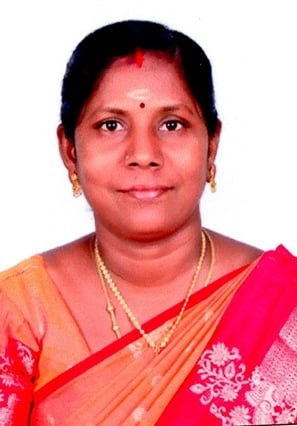
Shiyamala. M
Independent Candidate
147 Perambalur constituency, at Serial no 495 in Part no 213
PERAMBALUR (Reserved) ConstituencyIndependent
Loading...
Age
42
Education
Post Graduate
Verified
Profession
Daily wages (Hotel)
Constituency
PERAMBALUR (Reserved)
ViewAI-generated content based on web sources. Verify independently before making decisions.
About the Candidate
AIShiyamala M., 42, is an independent candidate contesting from the Perambalur (SC) constituency in Tamil Nadu. A post-graduate working as a daily wage earner in the hotel industry, she represents a rare profile in Indian electoral politics—a woman from a reserved constituency with modest economic means entering the political arena independently. Her declared assets of Rs. 4.91 lakh (including Rs. 2.41 lakh in movable assets and Rs. 2.50 lakh in immovable assets) reflect her working-class background, with no liabilities reported.
Despite filing official nomination papers with the Election Commission, Shiyamala has no discernible public profile, media coverage, or online presence. This is unusual even for independent candidates, suggesting either a hyperlocal campaign strategy or limited resources for wider outreach. The Perambalur (SC) constituency has traditionally been dominated by Dravidian parties—AIADMK's R. Thamizhselvan won in 2016, while DMK's M. Prabhakaran secured victory in 2021—making it challenging terrain for independent candidates without party machinery or established voter bases.
With no documented political history, previous electoral contests, or public positions on issues, voters have little information to assess her candidacy beyond the basic affidavit details. Her educational qualification as a post-graduate combined with her working-class profession presents an interesting juxtaposition, though without campaign manifestos, public statements, or voter outreach activities documented anywhere online, it remains unclear what specific issues or constituencies she aims to represent.
Voters in Perambalur (SC) should note that while Shiyamala's candidacy represents grassroots participation in democracy, the complete absence of any public record, campaign activities, or articulated policy positions makes it difficult to evaluate her suitability for legislative representation. Independent candidates face significant challenges in constituencies dominated by established parties, and without visible community engagement or documented track record of social work, voters have limited basis for informed decision-making.