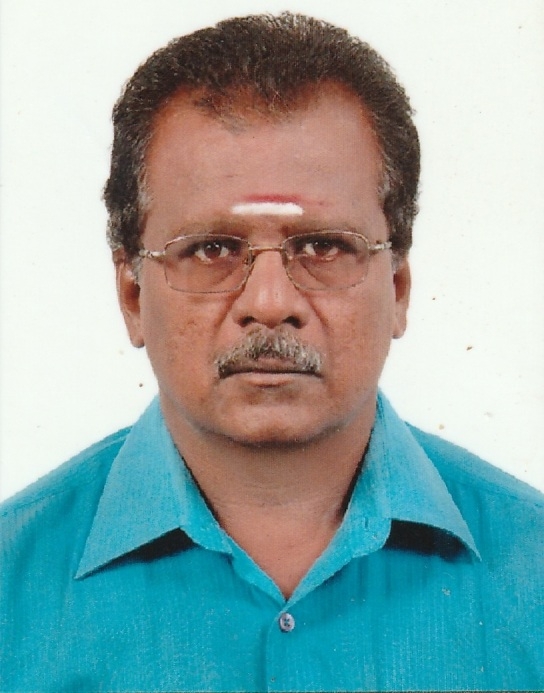
R.Vairam
Independent Candidate
Erode West constituency, at Serial no 424 in Part no 90
ERODE (EAST) ConstituencyIndependent
Loading...
AI-generated content based on web sources. Verify independently before making decisions.
About the Candidate
AIR. Vairam is a 66-year-old independent candidate contesting from the Erode East constituency in Tamil Nadu. With a 10th standard education and declaring himself as self-employed, Vairam represents a grassroots entry into electoral politics in one of Tamil Nadu's most politically active constituencies. He has declared total assets of Rs. 18.90 lakhs, all movable, with no immovable property or liabilities, suggesting a modest economic background. His financial profile is straightforward for a self-employed individual in the region.
Erode East has been a hotbed of political activity, particularly with recent by-elections in 2023 and 2025 following the death of Congress MLA EVKS Elangovan. The constituency, which includes urban and semi-urban areas heavily dependent on agriculture and textile industries, has seen intense contests primarily between DMK and NTK, with DMK winning recent elections decisively. The constituency has around 2.26 lakh registered voters, making it a significant electoral battleground where independent candidates typically face substantial challenges against well-funded party machinery.
Vairam has no criminal record according to his affidavit, with zero cases declared. However, his complete absence from online records, news coverage, and social media platforms is noteworthy. No information about his political activities, public statements, community work, or campaign initiatives could be found in available sources. This suggests either a very recent decision to contest or a campaign with minimal outreach beyond immediate local networks.
Voters should note that while Vairam's clean criminal record and modest financial declarations are positive signs, his lack of documented public service, political experience, or visible campaign presence raises questions about his capacity to effectively represent a constituency that requires substantial engagement with government machinery, development schemes, and constituent services. Independent candidates without party support often struggle to deliver on infrastructure, welfare schemes, and administrative interventions that constituents typically expect from their elected representatives.